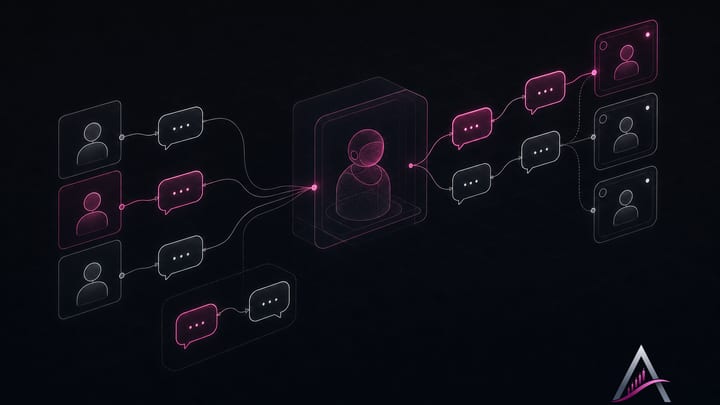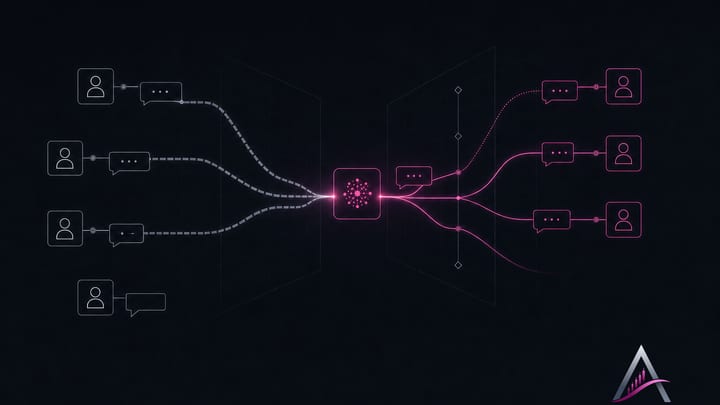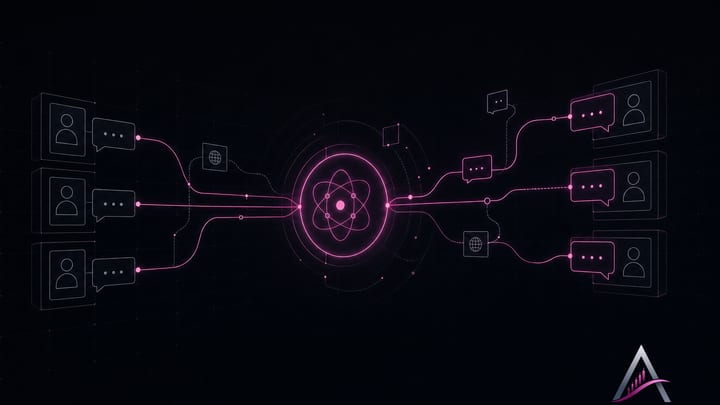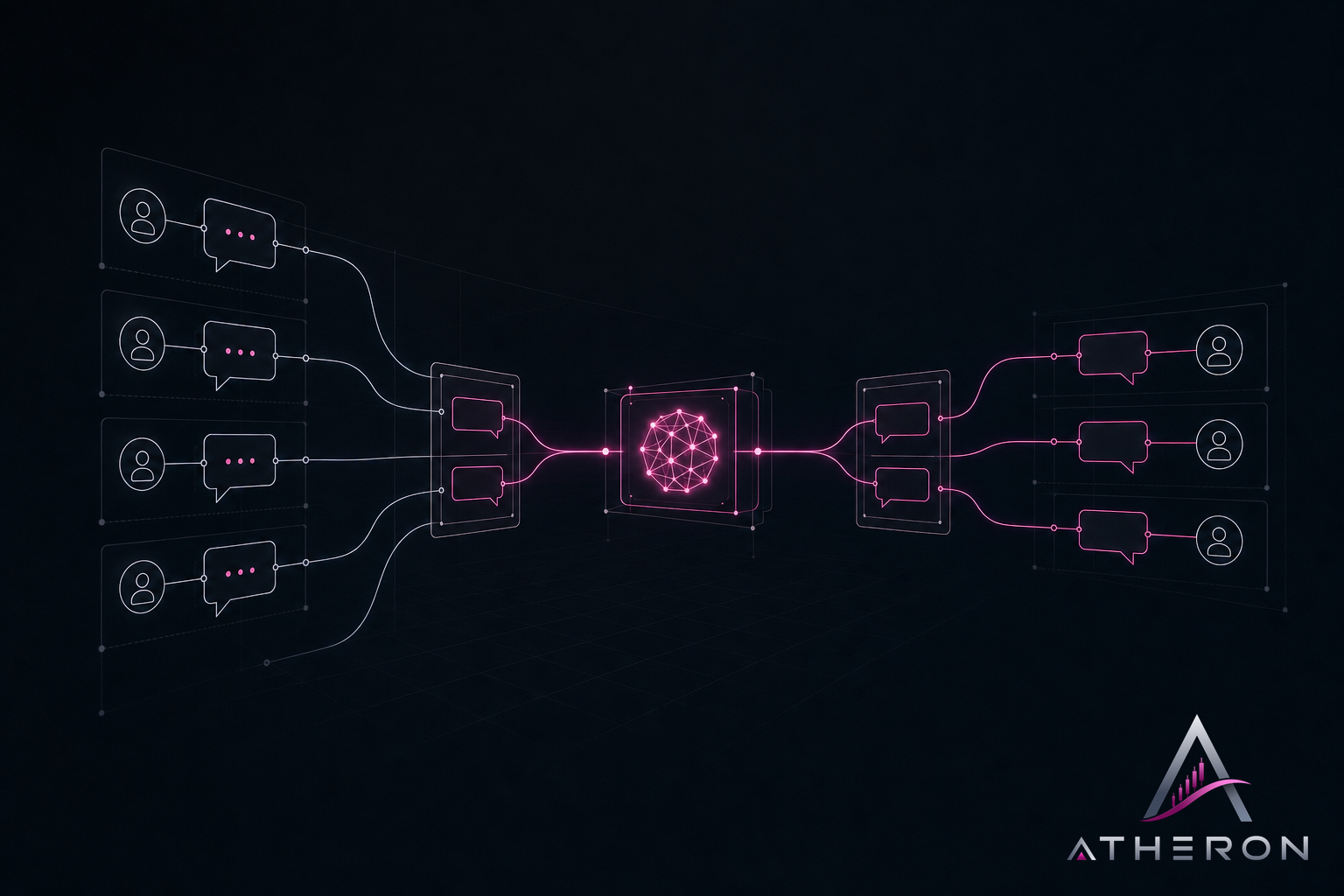
A hand-over is the moment a chat either keeps its trust or loses it. The customer has already explained their problem once. If they have to explain it again, the AI has made things slower, not faster.
This article is about that moment: what the customer should know before it, what should trigger it, and what the person taking over needs to see.
ATON Desk is coming soon and is not open to customers yet. What follows is how we designed it to work, and the habits we think make any hand-over better.
Start by saying it is an AI
The hand-over starts in the first message. If the customer knows they are talking to an AI, asking for a person later is a normal step. If they find out halfway through, it feels like a trick, and the person who takes over inherits a customer who is already annoyed.
In ATON Desk, the AI agent says it is an AI when it replies. No guessing, and no human-sounding act.
Offer a person early, not as a last resort
A customer who has to type "agent" three times to reach a human learns to distrust the AI before it has said anything useful.
We took a different line. The AI agent answers first, then offers a person after its first answer. The customer gets a real attempt at a quick answer, and a clear way out if it was not the right one. Nobody has to fight to reach your team.
Signs a chat should go to a person
Even with that offer in place, your team should agree on when a person must step in. These are the cases we would watch for:
- The customer asks for a person. That rule beats every other rule.
- The question involves money that has already moved, such as a charge, a refund or a cancellation.
- The customer is upset, or the conversation is going in circles.
- The answer depends on that customer's account or history, not on your general information.
- The AI has no good source for the answer. An agent trained on your website, files and answers should not guess beyond them.
- Something needs a judgement call or an exception to your usual policy.
Write your own list with your team. Keep it short enough that everyone remembers it.
The summary is the hand-over
When a person takes over in ATON Desk, it takes one click, and they get a short summary of the chat so far. That summary is what keeps the customer from repeating themselves.
A useful summary answers three questions fast:
- What does the customer want?
- What has the AI already told them?
- What is still open?
The operator should be able to read it in a few seconds and reply with something that moves the chat forward. A first message like "I see you have already tried resetting your password, let me check your account" tells the customer they were heard. "How can I help you today?" tells them they were not.
The full conversation is still there for anything the summary leaves out. The summary is a starting point, not a replacement for reading.
After the hand-over
A hand-over is also a signal. If the AI could not answer, there may be a gap in what it knows.
In ATON Desk, questions the AI could not answer become draft articles for you to approve. You review the draft, fix what needs fixing, and publish it. Next time, the AI has a source to answer from, and that question may not need a person at all. You stay in charge of what it says, because nothing goes in without your approval.
Over time, the hand-overs that remain should be the ones that truly need a person: account problems, money, upset customers, judgement calls. That is where your team's time is worth the most.
A short checklist
- The AI says it is an AI, from the start.
- A person is offered early, and asking for one always works.
- Your team has a written list of chats that go to a person.
- The operator reads the summary before the first reply.
- Unanswered questions are reviewed and turned into answers.
Where ATON Desk stands
ATON Desk is not open yet. When it opens, every plan includes AI conversations, there will be a free plan, and a trial with no card. Atheron's own support runs on it. If you want to know when you can try it, join the waitlist on aton-desk.com.